Rob Masters
Some Solarcan projects quietly impress us. Others stop us in our tracks.
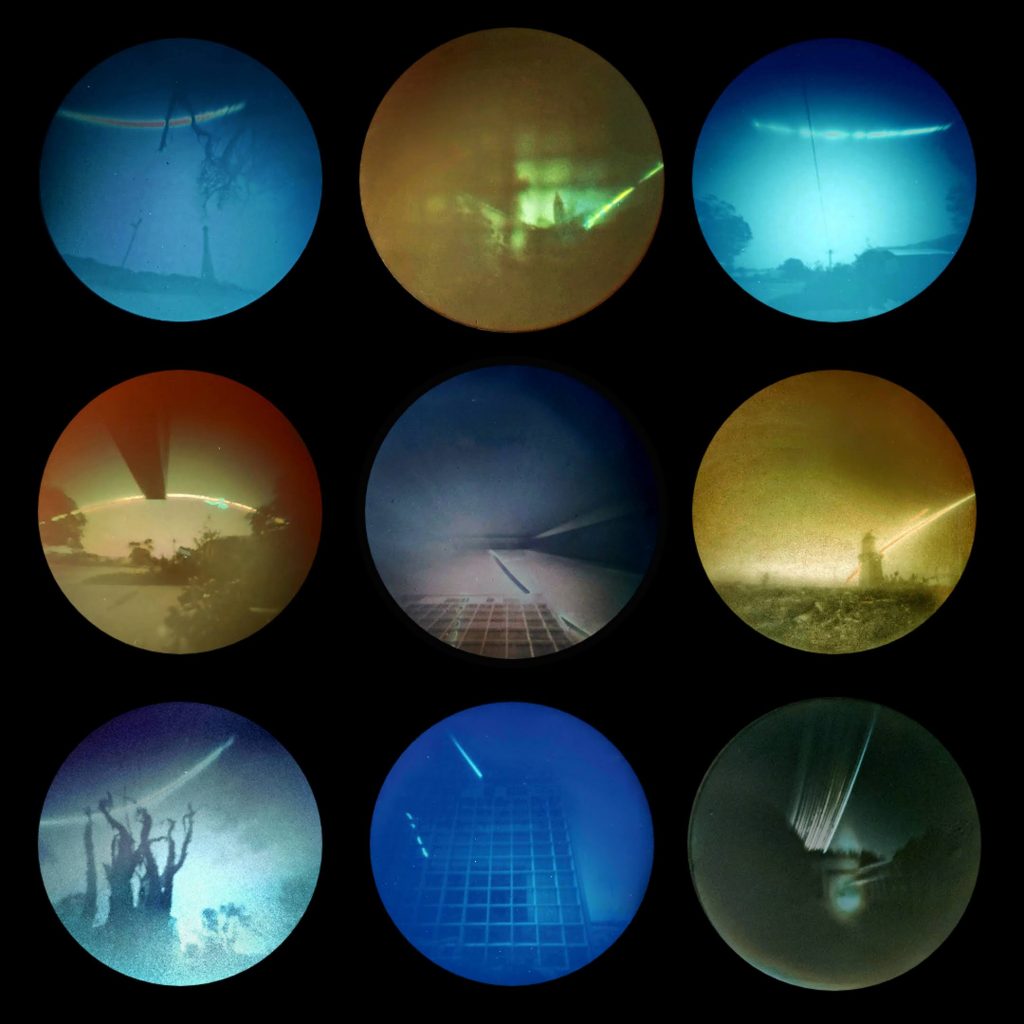
Rob Masters’ Many Faces of the Sun did exactly that. A grid of Puck images, with exposures ranging from 12 hours to 3 months, the piece was selected for the Astrofest Exhibition in Western Australia. It was one of just 36 prints chosen for the exhibition, which then toured across Western Australia.
For us, that is exactly what a Solarcan Super User should represent: curiosity, patience, experimentation, and a finished body of work strong enough to stand proudly in a public astronomy exhibition.
So we are delighted to announce our next Solarcan Super User:
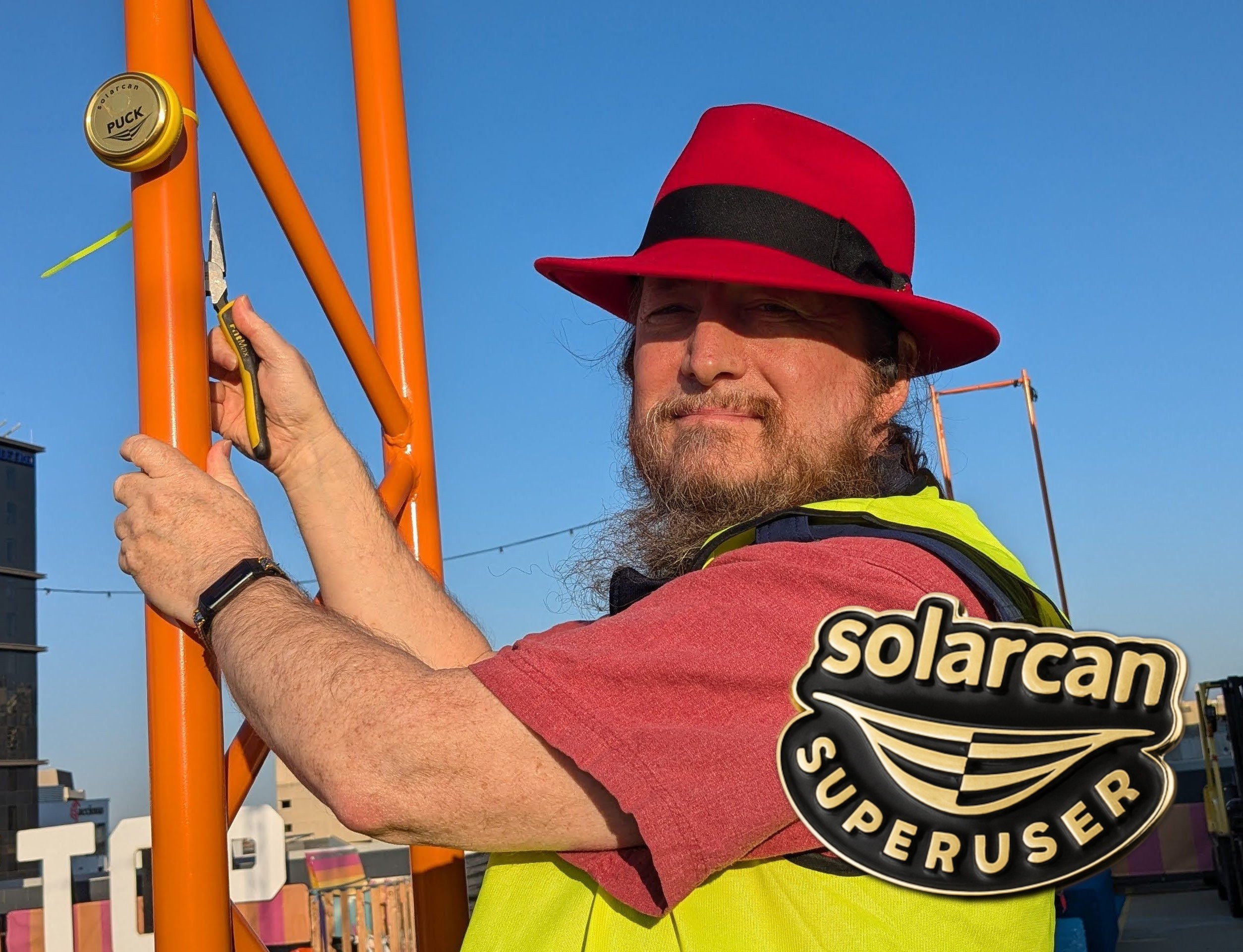
Rob is based in Perth, Western Australia, which places him almost exactly on the other side of the world from Solarcan HQ here in Hawick, Scotland. Our previous Super User, Nic Spencer, worked through the long, shifting skies of the UK. Rob’s work comes from a completely different solar perspective: southern hemisphere light, high summer Sun, bright rooftops, and a landscape where the Sun behaves very differently from the one we know here.
That difference matters. Rob is not simply placing cameras and hoping for the best. He is thinking carefully about latitude, angle, exposure, season, height, and placement. In Perth, the summer Sun can climb almost overhead, making some solargraphy setups surprisingly difficult. Rob’s response has been to adapt, experiment and keep going.
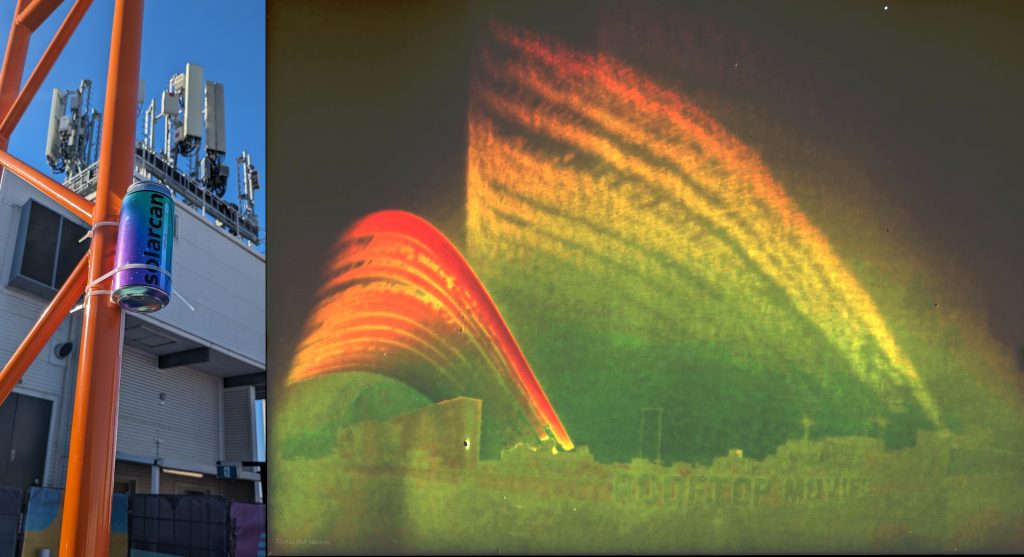
Rob first came to our attention back in 2021 and has been producing thoughtful solargraphy work ever since. One early project used a Solarcan to create a six-month rooftop solargraph, looking out across his roof towards the neighbouring houses. Like much of Rob’s work, it has that lovely mixture of experiment, observation and domestic landscape, the Sun’s path drawn across the everyday world.
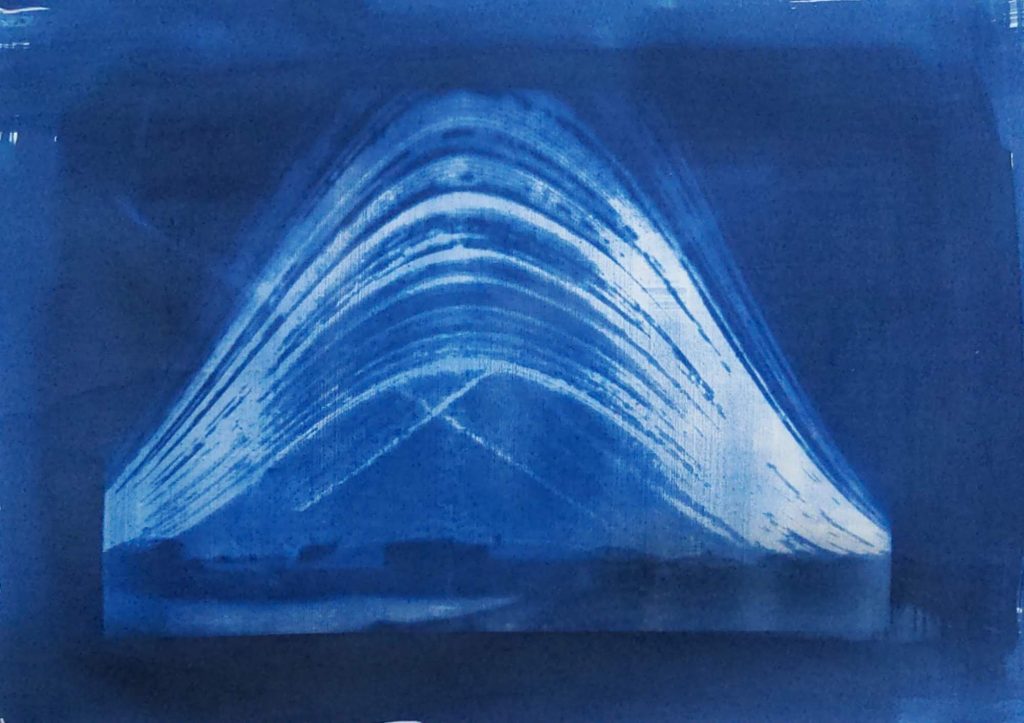
He has also explored what happens when Solarcan meets other analogue photographic processes. In one project, Rob took a Solarcan image and turned it into a cyanotype through contact printing. It is a beautiful idea: one slow photographic process feeding into another. Solargraphy and cyanotype both reward patience, and Rob’s combination of the two feels completely natural.
Then there are Rob’s Rooftop Movies projects, which are some of our favourites.
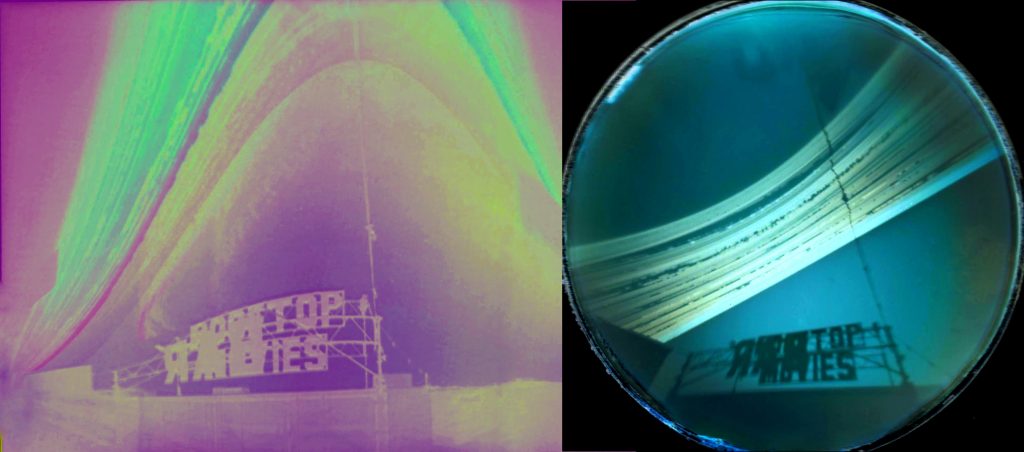
With permission from the venue, Rob installed cameras around the Rooftop Movies cinema in Perth, using a mixture of Pucks, Solarcans and home-built pinhole cameras to capture the Sun’s path over the venue. These images are not just solargraphs; they are records of a place. Signs, structures, shadows, rooftops, projection spaces and public architecture all become part of the final image.
That generosity is a big part of why Rob deserves this recognition. He has always been kind, thoughtful and gentlemanly in the way he shares his work online. He posts his results, explains his methods, talks about what worked and what didn’t, and helps other people understand the process behind the image.
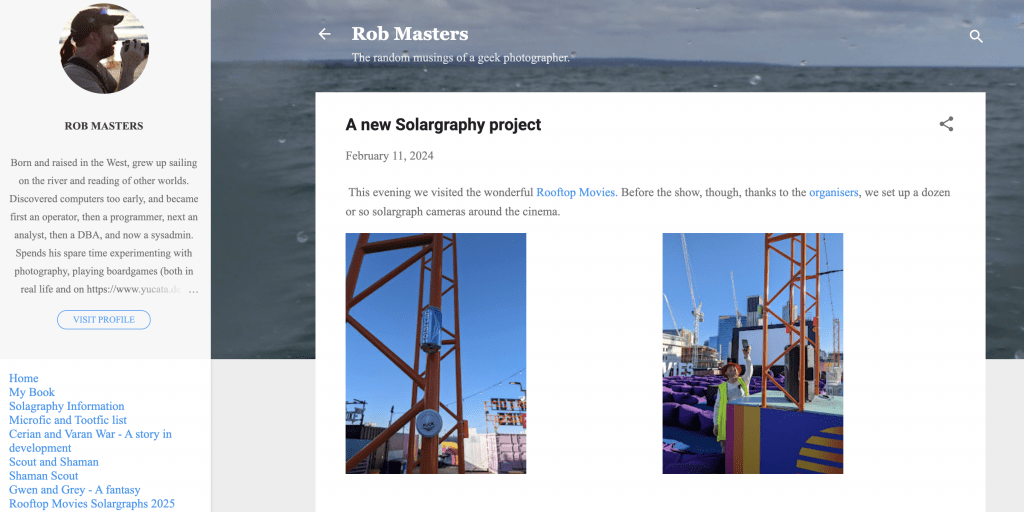
Rob also runs his own blog, which we strongly encourage you to visit. It is full of solargraphy notes, experiments, project write-ups and useful information for anyone interested in slow photography, pinhole cameras or simply watching the Sun draw itself across photographic paper.
For the Astrofest achievement, the Rooftop Movies series, the cyanotype experiments, the long-running documentation, and the generous way he shares his work with the community, Rob Masters is exactly the sort of person the Solarcan Super User badge was made for.
Rob, congratulations.
A shiny golden Solarcan Super User pin is now on its way to Australia. It cannot be bought, only earned, and you have most certainly earned it.